
Key Takeaways
- Dashcam footage can provide critical evidence in car accident cases.
- Dashcams help establish the sequence of events, liability, and even capture hit-and-run drivers.
- Texas courts generally allow dashcam videos, but their admissibility depends on proper handling of the footage.
- Having dashcam evidence can speed up insurance claims and legal processes.
- Privacy laws and best practices should be observed when using dashcams in Houston.
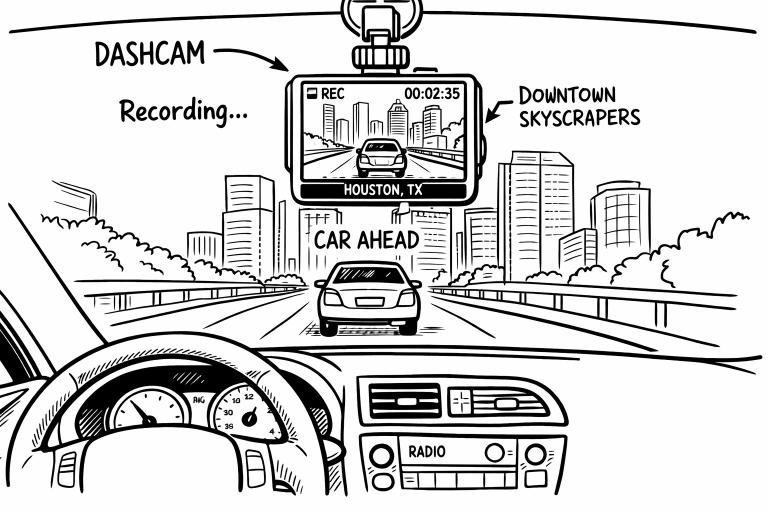
Car accidents are unfortunately a common occurrence in Houston, resulting in confusion, disputes, and, often, lengthy investigations. One tool that is becoming increasingly vital in these scenarios is dashcam footage. As more drivers recognize the value of dashcams, the evidence they capture can be pivotal when seeking help from a car accident law firm or resolving an insurance claim. Understanding how dashcam evidence helps accident victims and authorities can significantly affect the outcome of a car accident case. Dashcam recordings offer an objective account of an accident, eliminating the need to rely solely on the memories or statements of those involved. They provide visual proof of what happened on the road, which is especially helpful in busy and sometimes chaotic Houston traffic. As the technology becomes more accessible, both everyday drivers and legal professionals increasingly rely on dashcam evidence to establish facts that might otherwise be disputed.
How Dashcam Evidence Helps After a Houston Car Accident
After a collision, the moments that follow are often filled with stress and confusion. Dashcams record what happened before, during, and after the incident, making it easier for authorities and insurance adjusters to determine liability. This technology enables more transparent claims processing and provides invaluable support when stories conflict or details are unclear.
Beyond the accident scene, dashcam footage can help protect a driver from false accusations or staged accidents. Video proof often deters fraud and helps reputable insurers and authorities proceed with confidence in their assessments. If you are involved in litigation and need to demonstrate your innocence or clarify responsibility, dashcam evidence can be indispensable.
Dashcams vs. Other Types of Evidence
Traditional evidence such as witness statements, police reports, and photographs can sometimes be incomplete or subjective. Memory is fallible, and witnesses may be distracted or affected by the shock of the incident. Dashcam footage provides a real-time account, minimizing the potential for misinterpretation or confusion. While other pieces of evidence still play a crucial role, dashcams greatly enhance your ability to substantiate your version of events.
The Legal Significance of Dashcam Footage in Texas
In Texas, dashcam videos are generally admissible in court if they meet certain criteria. Footage must be authentic, relevant, and collected in accordance with state privacy regulations. This means the video should not be doctored or edited in a way that could misrepresent the facts. Courts often rely on dashcam footage to decide personal injury or property damage cases, especially when liability is in question.
If you plan to submit dashcam evidence, it is crucial to preserve the data immediately after the crash and avoid overwriting or losing the file. Legal experts recommend saving several copies and noting the time, date, and location displayed in the recording. For more on admissible evidence in Texas, you can refer to resources like the Texas Rules of Evidence.
Potential Challenges and Privacy Implications
Although dashcams provide valuable evidence, they raise privacy concerns and pose potential legal challenges. Recording people without their consent can sometimes raise issues, especially if audio is captured. Texas is a one-party consent state for audio recordings, meaning you can record conversations as long as you are a participant. However, it is essential to be aware of specific rules related to video surveillance, such as not recording in places where there is a reasonable expectation of privacy. Additionally, footage should be stored securely and only used for legitimate legal or insurance purposes. If the dashcam video is not handled properly, it may be excluded from proceedings or challenged by opposing parties.
Tips for Using Dashcams Effectively in Houston
- Install Your Dashcam Properly: Position your camera to ensure an unobstructed view of the road. It should not block your vision or distract you from safe driving.
- Use Quality Equipment: Invest in a reliable dashcam with high-definition capabilities and wide-angle lenses. Good resolution can help capture crucial license plates and traffic signals.
- Preserve Footage Immediately: After an accident, save the relevant video files and back them up to a secure location.
- Comply with Legal Requirements: Only use recordings appropriately and respect privacy rules to avoid legal complications.
- Consult Professionals: If you're unsure about handling dashcam evidence, consult a qualified car accident law firm familiar with local regulations and best practices.
Conclusion
Dashcams are transforming the way car accidents are investigated and adjudicated in Houston. By offering an unbiased account of what occurred, dashcam evidence helps resolve disputes, speeds up insurance claims, and provides peace of mind to responsible drivers. As with any powerful tool, understanding how to use dashcams legally and effectively is vital to maximizing their benefits and safeguarding your rights.
Comments
Post a Comment
All comments are moderated before being published. Any inappropriate comments are forwarded to your mail server so that they may take proper action.