
Key Takeaways
- Define the insulation problem before requesting estimates.
- Compare local experience, scope of work, pricing, timing, and warranty terms.
- Read reviews for recurring patterns, not just a high star rating.
- Confirm applicable licenses, insurance, and product or installer credentials.
- Choose the provider offering the clearest overall value for your Jupiter property.
In Jupiter, Florida, comparing insulation providers takes more than entering a search term and choosing the first company that appears. Between long cooling seasons, coastal humidity, intense sunshine, and sudden heavy rain, an insulation project should address the specific conditions affecting your home, garage, metal building, or commercial space. A local option, such as Airtight Spray Foam Insulation, LLC, may be part of your research, but every property owner should still ask clear questions and compare the details before booking.
The best provider is not automatically the lowest-priced one or the company with the most polished website. Installation quality, communication, material selection, ventilation considerations, cleanup, and follow-up support can all affect whether an insulation upgrade actually improves comfort and energy performance.
Why a Quick Search Is Not Enough
Two Jupiter insulation contractors may use similar service labels while proposing very different solutions. One may quote a limited attic application, while another may inspect access points, duct areas, wall cavities, or air leaks that contribute to hot rooms and persistent humidity. A lower number on an estimate is only useful when the scope is equally complete.
Step 1: Define the Job Before Asking for Quotes
Start by describing what you are experiencing. Note whether the attic feels excessively hot, certain bedrooms never cool evenly, the AC runs constantly, or humid air seems to enter around the garage or roofline. Include the building type, approximate age, project area, preferred timing, and any budget limits. A clear request gives providers a fair chance to recommend an appropriate solution.
Step 2: Build a Short List of Local Options
Gather three to five providers that serve Jupiter and nearby Palm Beach County communities, then confirm that each handles the exact work you need. For example, attic insulation, closed-cell foam, open-cell foam, retrofit work, new construction, and metal-building applications may require different approaches. If you want an insulation plan built around comfort, air sealing, and the overall building envelope, review how an Airtight Comfort System™ is described before deciding whether this type of service aligns with your goals.
Local service area matters because a nearby provider may be better positioned to conduct an on-site inspection, make scheduling changes, and address follow-up questions. Still, proximity alone is not enough. Ask whether the company has completed comparable projects in homes exposed to South Florida heat and moisture.
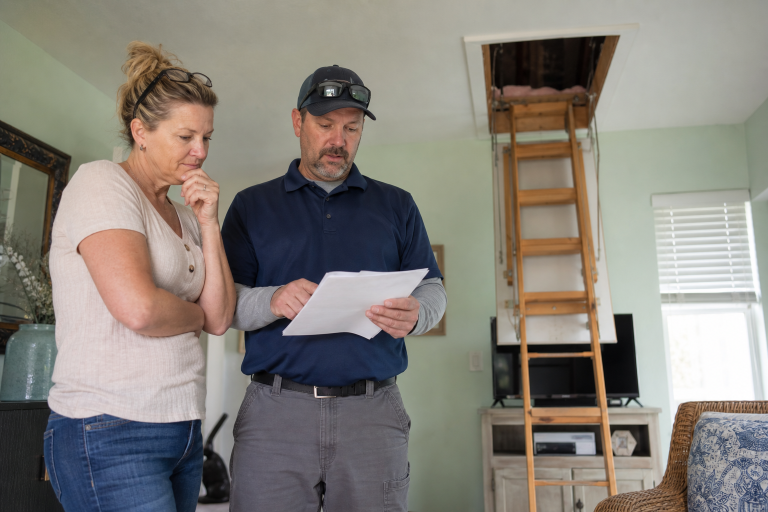
Step 3: Read Reviews for Useful Patterns
Online reviews can help, but they should be treated as clues rather than proof. Look for repeated comments about punctuality, estimate accuracy, respect for the property, artistry, cleanup, and the company's handling of questions after installation. Give more weight to recent, detailed feedback than one-line praise or criticism.
It is also smart to compare feedback across multiple platforms and watch for unusual patterns, such as many vague reviews appearing in a short period. The FTC explains how to evaluate online reviews by considering the reviewer, the timing, and the platform's reliability, rather than assuming every rating is equally meaningful.
Step 4: Verify Insurance, Credentials, and Experience
Requirements can vary by service, project type, and local rules, so ask what licenses or registrations apply to the proposed work. Request proof of relevant liability insurance and ask who will perform the installation. A company should be able to explain its experience with the proposed material, how it prepares the work area, and how it verifies that the application meets the stated scope.
Credentials do not guarantee a perfect outcome, but a provider who answers these questions directly is usually easier to evaluate than one who relies on broad promises. Be cautious if a business avoids discussing insurance, refuses to put details in writing, or cannot explain why a particular insulation material is suitable for your property.
Step 5: Compare Estimates Line by Line
For a substantial insulation project, request at least two or three written estimates. Make sure each provider is quoting the same general area and objective. Then compare the following items:
- The rooms, attic sections, walls, roof deck, or other areas are included.
- The insulation type, thickness, and any stated performance specifications.
- Labor, materials, preparation, cleanup, and disposal costs.
- Whether removal of old insulation, sealing work, or repairs are included.
- Expected start date, completion date, payment schedule, and warranty terms.
- Any conditions that could create an added charge.
A higher estimate may offer stronger value if it includes more complete preparation, clearer documentation, durable materials, or a better-defined warranty. Conversely, a lower price may be reasonable for a small, straightforward project with a limited scope. The key is knowing exactly what is and is not included.
Step 6: Ask Better Questions Before Booking
Use a call or consultation to test how clearly each provider communicates. Useful questions include:
- Have you completed projects like mine in Jupiter or coastal South Florida?
- Who will perform the work, and will a supervisor be available?
- What preparation will be needed inside and outside the property?
- What could change the quoted price or timeline?
- Are cleanup, disposal, and any necessary follow-up included?
- What warranty or service guarantee will I receive in writing?
- What should I do if I notice an issue after the project is complete?
Step 7: Review the Agreement Before Paying
Before authorizing work, ensure the agreement includes the business name, contact details, scope, materials, total price, payment terms, start date, completion expectations, and warranty information. Verbal assurances should be written into the agreement. Do not sign blank forms or accept unclear language simply because the job feels urgent.
Pressure to book immediately, cash-only demands, unexplained changes to estimates, or requests for full payment before work begins all deserve a second look. The FTC's guidance on avoiding home improvement scams reinforces the value of multiple estimates, written contracts, insurance confirmation, and careful payment practices.
A Simple Final Comparison Checklist
- Service fit: Does the provider address the actual comfort, heat, humidity, or air leakage concerns?
- Experience: Can the company describe similar local projects?
- Estimate clarity: Are materials, areas, costs, and exclusions clearly listed?
- Timing: Is the schedule realistic for your household or business?
- Communication: Are questions answered promptly and directly?
- Warranty: Are follow-up and repair terms documented in writing?
Choose the Best Overall Fit
Comparing insulation providers in Jupiter does not have to be complicated. Define the problem, shortlist qualified local companies, review feedback carefully, verify credentials, compare written estimates, and read the agreement before paying. When you look beyond price and star ratings, you are more likely to select a provider whose approach fits your property, budget, schedule, and long-term comfort goals.
Comments
Post a Comment
All comments are moderated before being published. Any inappropriate comments are forwarded to your mail server so that they may take proper action.